What is Estate Jewelry? Why Craftsmanship Matters
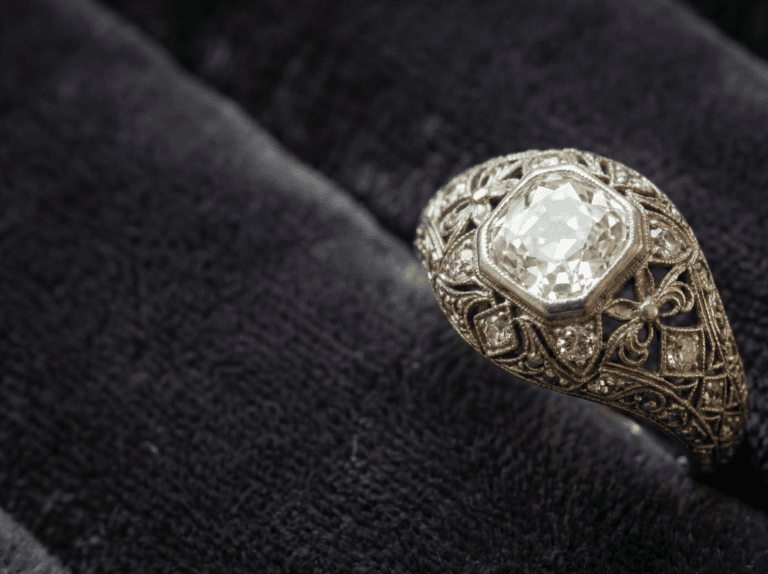
Have you ever looked at a ring and felt like it was holding a secret? There is a distinct weight and warmth to older jewelry that is difficult to find in the sparkling, yet often uniform, cases of modern big-box stores.
However, the terminology can be confusing. “Vintage,” “Antique,” “Estate”—these words are often thrown around interchangeably, leaving many buyers unsure of what they are actually looking at.
At Lilliane’s Jewelry, we believe that buying jewelry should never be a guessing game. Many couples and collectors visiting our Leawood showroom ask us: “What does ‘estate’ actually mean, and is it better than buying new?”
In this guide, we’ll demystify the terminology, explore the lost art of hand-fabrication, and help you decide if a piece of history belongs in your future.
Decoding the Dictionary: What is Estate Jewelry?
Let’s start with the simplest definition. Estate jewelry simply refers to any piece of jewelry that has been previously owned.
Contrary to popular belief, the term doesn’t necessarily mean the original owner has passed away, nor does it strictly imply the piece is hundreds of years old. If a piece was bought new in 2020 and sold to us today, it is technically “estate jewelry.”
However, within the umbrella of “Estate,” there are two specific categories that refer to the age of the piece:
Vintage: Jewelry that is at least 20 years old. (Think 1990s retro back to the mid-century).
Antique: Jewelry that is over 100 years old. (Victorian, Edwardian, and Art Deco eras).
The Lost Art: Hand-Fabrication vs. Mass Production
The most compelling reason to buy older estate pieces isn’t just the price—it’s the construction.
The Modern Standard: CAD and Casting
Today, the vast majority of jewelry—even high-end luxury brands—is created using Computer-Aided Design (CAD). A 3D model is printed in wax, and the metal is cast into a mold. While this allows for perfect symmetry and lower costs, the metal is often more porous (lighter) and the details are chemically etched or stamped.
The Estate Difference: Die-Striking and Hand-Forging
When you hold a piece of estate jewelry from the early 20th century or earlier, you are holding something that was likely die-struck or hand-forged.
Density: Die-striking involved slamming a heavy sheet of metal with a steel die under immense pressure. This created a ring that is denser, heavier, and more durable than modern cast rings.
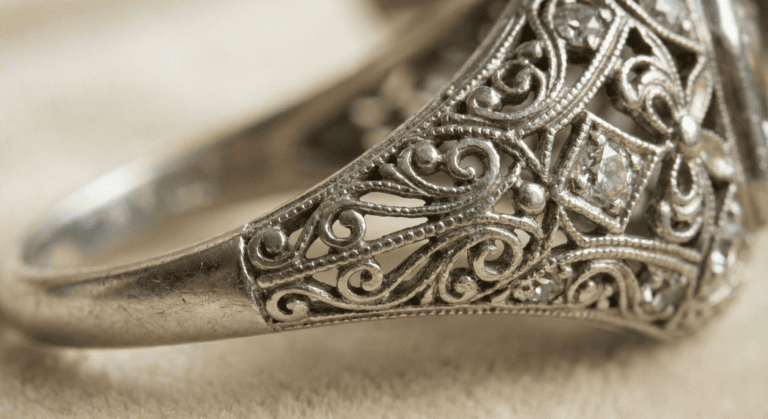
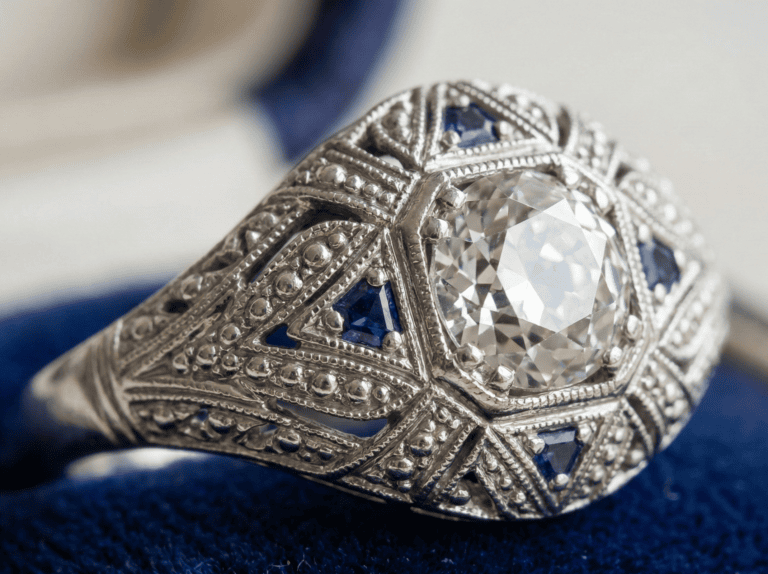
Detailing: Look closely at the milgrain (the tiny beaded edges) or the filigree (fine wire work) on an Art Deco ring. In estate pieces, these were often applied by hand by a master goldsmith, not printed by a machine. This human touch gives the piece a “soul” and uniqueness that mass-produced items simply cannot replicate.
The "Green" Choice: Sustainability
In an era where we are all more conscious of our environmental footprint, estate jewelry is the ultimate sustainable luxury. No new mining was required to create the piece. No new energy was spent on manufacturing. You are essentially recycling a piece of art, extending its life and story.
Honest Considerations: Is Estate Right for You?
While we love the romance of estate jewelry, we value transparency above all else. There are factors to consider before falling in love with a vintage treasure.
Wear and Tear: Gold and platinum are durable, but not invincible. A ring that has been loved for 80 years may have thinner shanks (the band part) or prongs that need retipping.
Delicate Stones: Older cuts of diamonds (like Old European or Old Mine cuts) are tough, but accent stones like emeralds, pearls, or opals in vintage settings can be fragile and sensitive to water or chemicals.
Maintenance: Buying estate means committing to regular check-ups. We recommend bringing your piece in every 6 months to ensure the structural integrity remains sound.
### Lilliane’s Tip: The “Loupe” Test When shopping for estate jewelry, ask to see the piece under a jeweler’s loupe (magnifying glass). Look at the prongs holding the center stone. Are they worn flat? Do they lift slightly off the gem?
At Lilliane’s, we inspect and restore every estate piece before it hits our case, but understanding what to look for empowers you as a buyer. We love it when our customers ask to see the “under the hood” details!
Finding the Piece that Speaks to You
There is a magical moment when a client tries on an estate ring and realizes it fits their style perfectly—as if it traveled through time just to find them. Whether you are drawn to the geometric boldness of the Art Deco era or the romantic whismy of the Victorian age, these pieces offer a character that modern molds just can’t match.
However, we know that the “pre-loved” aspect isn’t for everyone, and that is okay!
For the Soulful Collector: Browse our curated Estate & Vintage Collection to find a one-of-a-kind treasure.
For the Modern Minimalist: If you prefer untouched perfection, view our Designer Collection for the best in contemporary craftsmanship.
Visit us in Leawood today, and let’s find the piece that tells your story.
FAQ
Q: Is estate jewelry cheaper than new jewelry?
A: Generally, yes. Estate jewelry is often exempt from the manufacturing and marketing markups associated with new designer pieces. This means you can often get a higher-quality diamond or heavier gold weight for a better price compared to buying brand new.
Q: What is the difference between "estate" and "heirloom" jewelry?
A: “Estate” describes the market status (previously owned), while “heirloom” describes the sentimental status (passed down through a family). A ring you buy from our estate case can become your family heirloom, but it is sold as estate jewelry.
Q: Can I wear an antique engagement ring every day?
A: Yes, but with care. Rings made of Platinum or 14k/18k Gold with Diamonds or Sapphires are generally durable enough for daily wear. However, antique rings with softer stones like Pearls, Opals, or Emeralds are not recommended for daily wear, especially for those with active lifestyles.
Q: How do I know the history of an estate piece?
A: While we can determine the era (e.g., 1920s) and origin based on hallmarks and style, the specific personal history of previous owners is usually unknown. The mystery is part of the allure—you get to write the next chapter.
