Old European Cut Diamond vs Modern: Which Sparkle is Best?
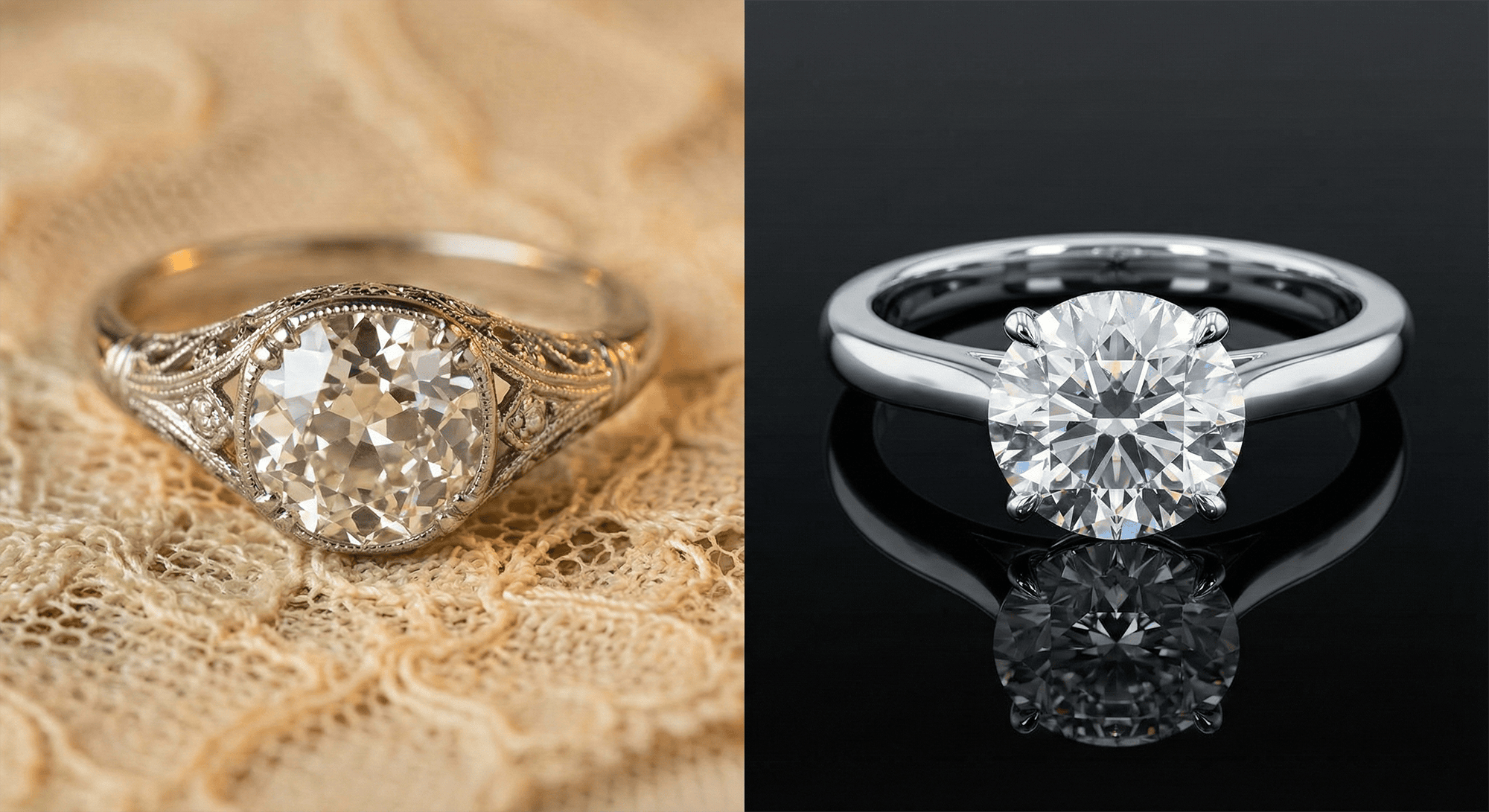
There is a moment we see happen constantly here at our Leawood showroom. A couple comes in, looking for an engagement ring, expecting every diamond to look roughly the same. Then, we place a genuine antique ring next to a brand-new setting, and their eyes widen.
"Why does that one look... deeper?" they ask.
It is one of the most common questions we field: What is the actual difference between the diamonds of the past and the diamonds of today? While they are both composed of the same material—carbon compressed over billions of years—the way humans have shaped them has changed drastically over the last century.
If you are torn between the romantic history of an estate piece and the precision of a contemporary ring, you aren't alone. Today, we are breaking down the Old European cut diamond vs modern brilliant debate to help you decide whether you prefer the "disco ball" brilliance of the present or the moody "candlelight" glow of the past.
A Tale of Two Eras: Hand-Cut vs. Laser Precision
To understand the difference in sparkle, you have to understand the difference in technology.
The Old European Cut (OEC)
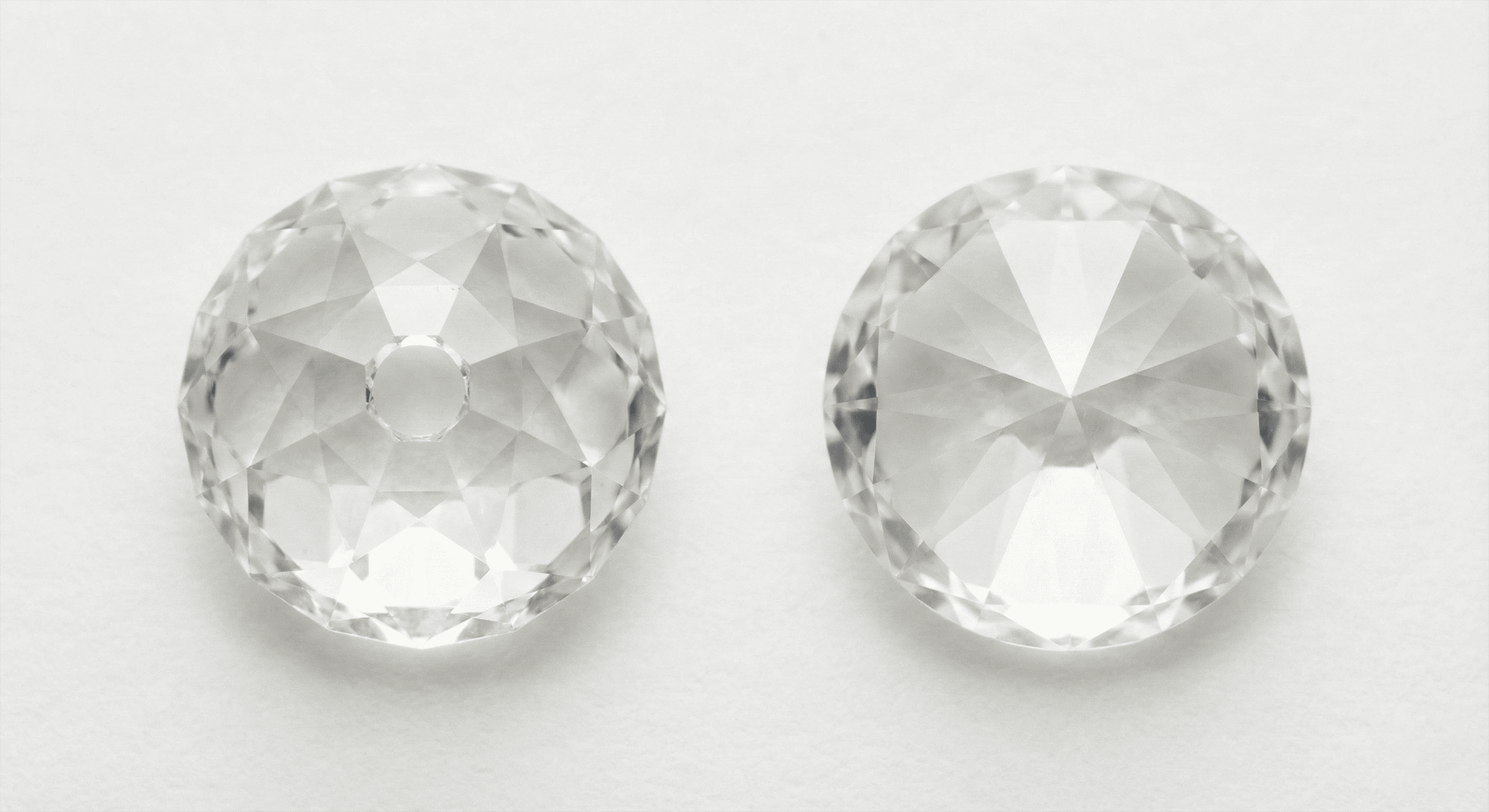
The Old European Cut was the standard for diamond cutting from roughly 1890 to the 1930s—the Victorian, Edwardian, and Art Deco eras. During this time, diamonds were cut by hand. Cutters relied on their eyes and the physical cleavage planes of the rough stone to maximize its weight.
Because they were cut by candlelight or gaslight (before bright electric store lights were common), they were designed to draw the eye in. They have:
- Small tables (the flat top surface).
- Steep crowns (the top angle).
- Large "chunky" facets.
- An open culet (a small flat facet at the bottom, which often looks like a tiny circle in the center of the stone).
The Modern Round Brilliant
Fast forward to today. Modern Round Brilliant cuts are designed using advanced mathematics and cut with laser precision. The goal of a modern cut is to maximize light return. When light hits the stone, the cutter wants as much of it as possible to bounce back up to your eye immediately.
These stones feature:
- Larger tables.
- Lower crowns.
- Precise, symmetrical faceting.
- A pointed culet (no hole at the bottom).
The Sparkle Test: Inner Fire vs. Surface Brilliance
This is where the magic happens. The physical differences in the cutting style result in two completely different optical behaviors.
The Modern Look: The "Disco Ball"
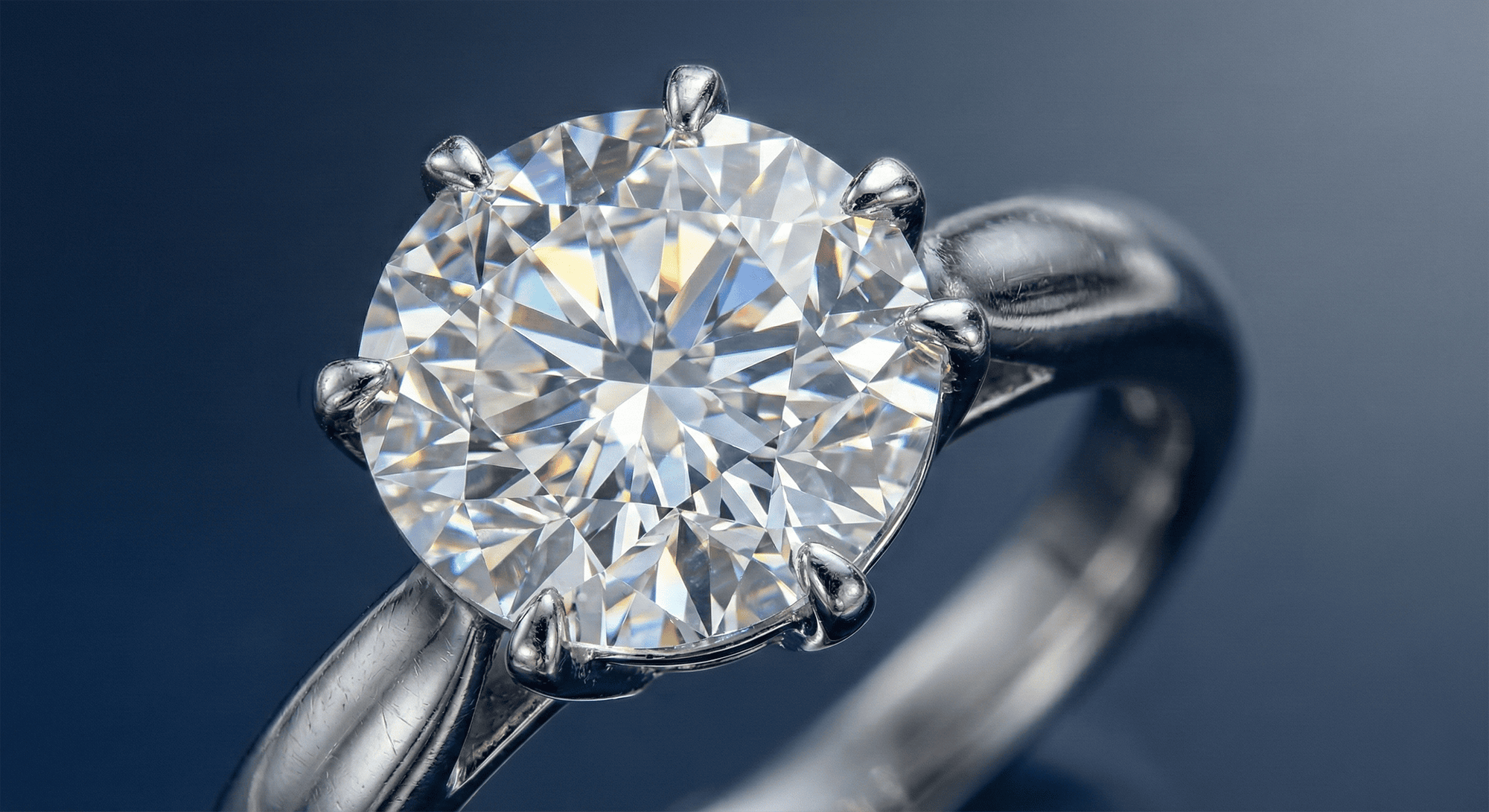
Because modern diamonds are engineered for total light reflection, they produce intense scintillation. This is that blinding, white-light sparkle you see in jewelry store commercials. It is sharp, fast, and electric. If you want a diamond that flashes across the room in a bright office or under sunlight, the modern brilliant is the winner.
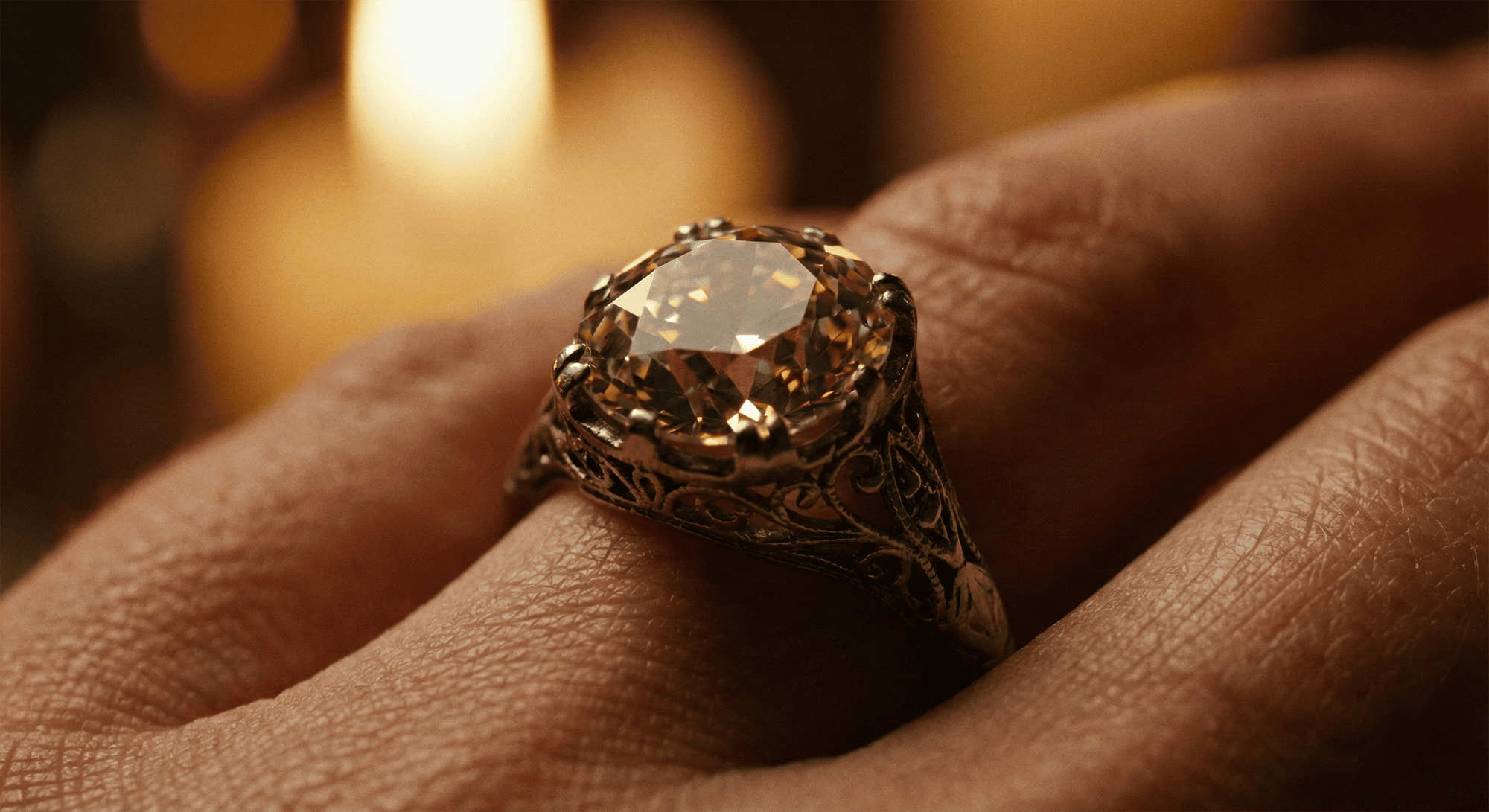
The Vintage Look: The "Inner Fire"
Old European cut diamonds don't just reflect light off the surface; they seem to pull light inside. Because of those larger, chunkier facets, OECs display more dispersion—the breaking of light into spectral colors (rainbows).
We often describe the OEC sparkle as a "checkerboard" or "flower petal" pattern. It is a slower, warmer sparkle. Under low light—like a romantic dinner or evening candlelight—an Old European cut won't go dark; it will glow. It feels moodier and, many would argue, more romantic.
💎 Lilliane's Tip: Embrace the Warmer Tones
In modern diamonds, customers often pay a premium for "Colorless" (D-F) grades because yellow tints can look dull against the sharp white sparkle.
However, Old European Cuts actually benefit from warmer colors (J, K, L grades). The slight warmth complements the antique "glow" and looks stunning in yellow gold or rose gold vintage settings. Don't be afraid to drop down in color grade to get a larger carat size when buying vintage!
Side-by-Side Comparison
| Feature | Old European Cut (Vintage) | Modern Round Brilliant |
|---|---|---|
| Era | ~1890–1930s | ~1950s–Present |
| Production | Hand-cut | Laser/Machine-cut |
| Symmetry | Organic, unique, slightly imperfect | Perfect mathematical symmetry |
| Sparkle Type | Large flashes of fire (Rainbows) | Intense white brilliance (Scintillation) |
| Culet | Visible open culet (small hole) | Pointed (invisible) |
| Best For | Romantics who love character | Perfectionists who love maximum shine |
Which Cut Suits Your Style?
Choosing between these two cuts isn't about which is "better"—it is about which personality fits your love story.
Reading about sparkle is one thing, but seeing it in person is the only way to truly know. Do you fall for the romantic, chunky fire of the antique, or the dazzling light show of the modern brilliant?
We invite you to visit our Leawood showroom to compare them side-by-side.
