
Fragile Beauty: How to Clean and Care for Your Vintage Jewelry
There is a specific kind of heartbreak that happens when you notice a stone is missing from your grandmother’s ring, or when the luster on a vintage pearl necklace suddenly looks dull.
At Lilliane’s Jewelry, we believe that vintage pieces are custodians of history. However, that history comes with a catch: age makes jewelry fragile. Many couples visiting our Leawood showroom ask us, "Can I just pop this in the ultrasonic cleaner I bought online?"
The short answer is: Please don't.
In this guide, you will learn exactly how to clean your vintage treasures without damaging them, which stones are strictly "hands-off" for machines, and how to store your collection to prevent scratches.
The "Do Not Disturb" List: The Ultrasonic Trap
Modern ultrasonic cleaners use high-frequency sound waves to vibrate dirt out of nooks and crannies. While this is fantastic for a modern diamond solitaire in a platinum setting, it can be catastrophic for vintage jewelry. The intense vibrations can loosen old prongs, shatter brittle stones, or strip away protective oils.
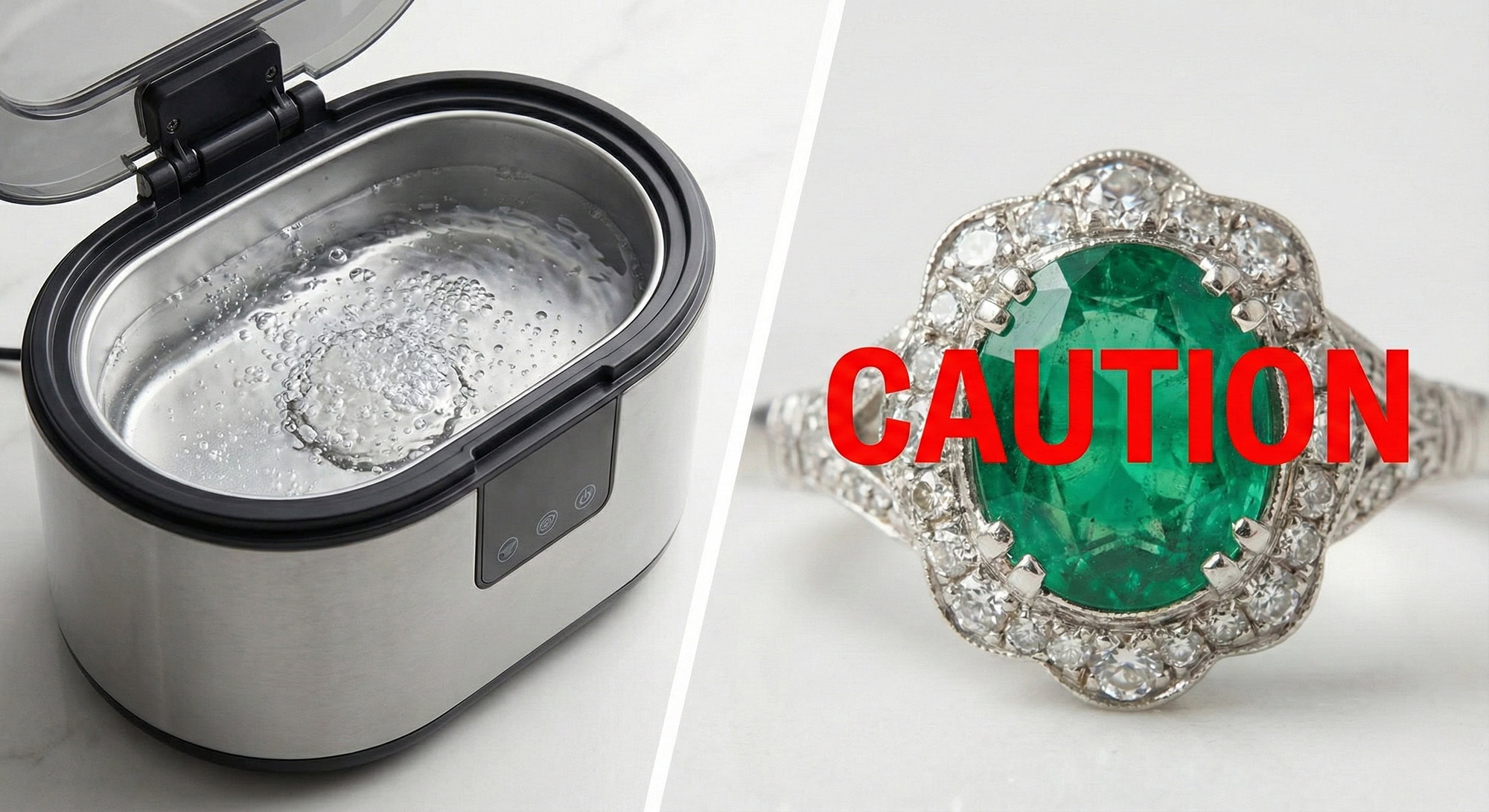
Never put these in an ultrasonic cleaner:
- Emeralds: Almost all emeralds are treated with oils to fill natural fissures. Ultrasonic waves can strip this oil out, leaving the stone hazy or cracking it entirely.
- Opals: These are porous and contain water. The heat and vibration can cause them to "craze" (crack internally).
- Pearls, Coral, and Turquoise: Organic and porous gems can be dissolved or discolored by the chemical solutions often used in these machines.
- Foil-backed stones: Common in Georgian and Victorian jewelry, these stones have a thin sheet of metal behind them to reflect light. Water can get trapped between the stone and the foil, ruining the reflection forever.
💡 Lilliane's Expert Tip
The "Shake Test" is a myth. You might hear people say, "Shake the ring near your ear; if it rattles, the stone is loose." Please avoid this! If a prong is worn thin—common in rings over 50 years old—shaking it might be the final force that dislodges the stone. Instead, bring it in for a professional microscopic inspection.
How to Clean Vintage Jewelry Safely
Cleaning isn't just about sparkle; it's about preservation. Dirt acts like an abrasive sandpaper. When dust and grime sit between your settings, they can slowly wear down the gold over time. Here are the two methods we recommend.
The Professional Choice: Lavish Foam Cleaner
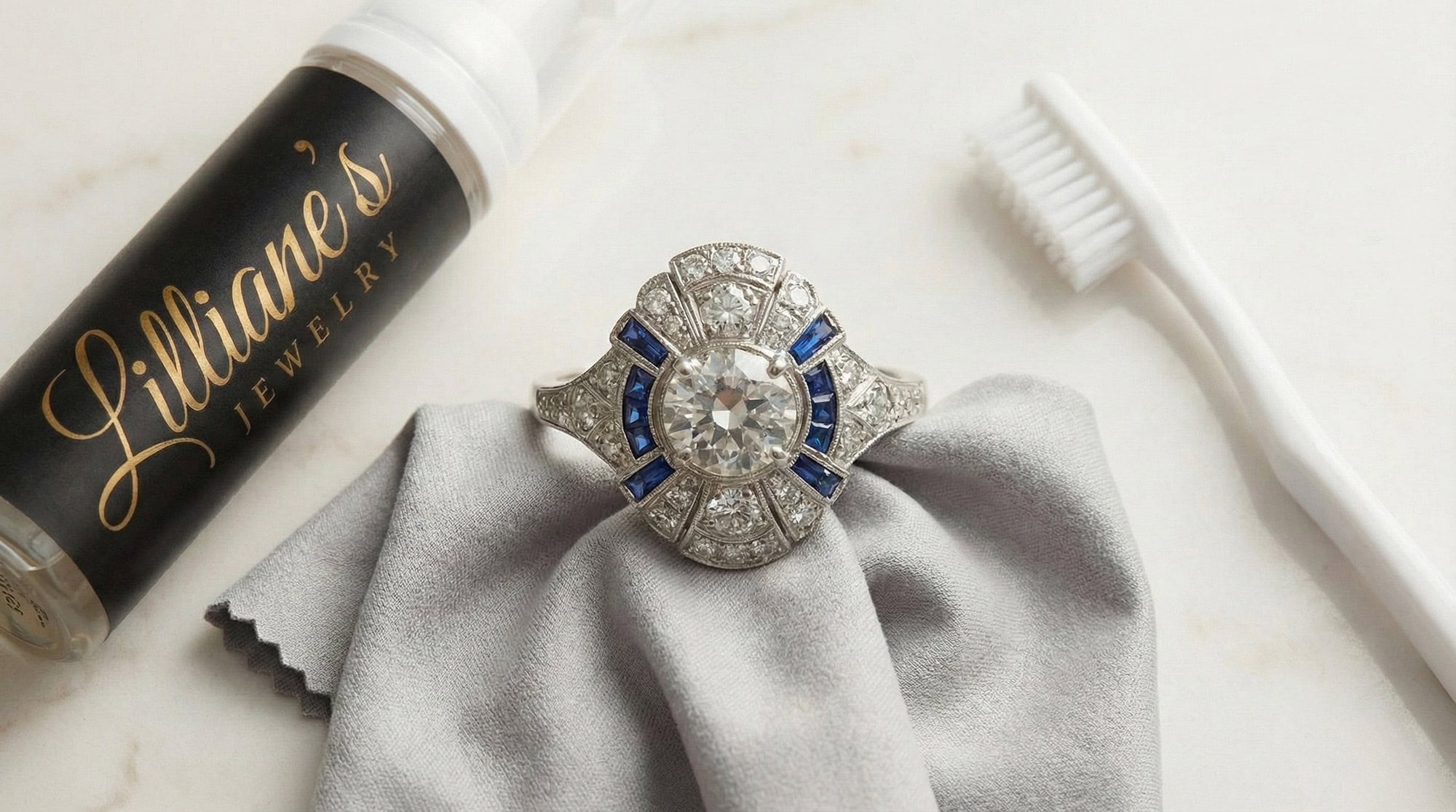
For our clients who want that "fresh from the showroom" sparkle without the hassle of mixing bowls, we recommend and sell a product called Lavish. It is a bio-based cleaner that is safe for almost all gems (including pearls and opals) because it doesn't use harsh chemicals.
The Lavish Method:
- Foam: Dispense the foam directly onto the jewelry. It clings to the piece, breaking down oils and lotions.
- Sit: Let it sit for 10–15 seconds to work its magic.
- Brush: Use the soft brush provided to gently clean behind the setting.
- Rinse: Rinse with water and pat dry.
Stop by the store to pick up a bottle if you want to make your weekly cleaning routine easier!
The "In a Pinch" DIY Method
If you don't have Lavish on hand, you can use items from your kitchen—carefully.
- The Solution: Mix a small bowl of warm (not hot) water with a few drops of mild dish soap. Avoid moisturized soaps or harsh detergents.
- The Soak: Let the piece soak for 10 to 15 minutes. This loosens the grime.
- The Scrub: Use a very soft-bristle baby toothbrush. Gently brush behind the stone and around the prongs. Do not scrub vigorously.
- The Rinse: Rinse under warm running water—but always plug the drain first!
- The Dry: Pat dry with a lint-free cloth. Avoid paper towels, as the wood fibers can actually cause micro-scratches on softer gold alloys.
Storage Secrets: Prevention is Key
Diamonds are the hardest substance on earth, which means they will scratch literally anything else they touch—including other diamonds, gold, and certainly your pearls.
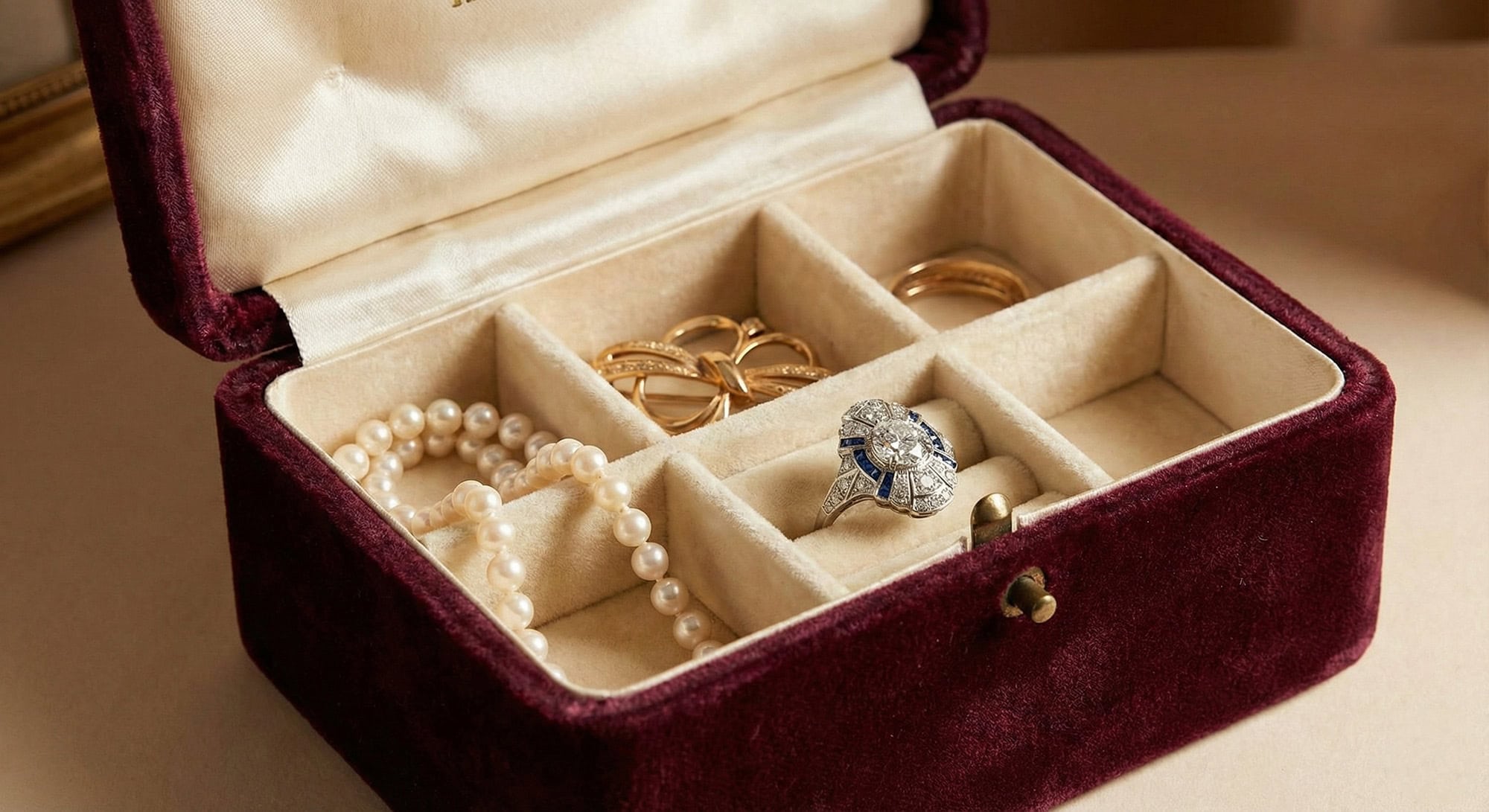
Throwing all your jewelry into a single bowl or drawer is a recipe for damage. Here is how to store your pieces to maintain their value:
- Individual Compartments: Use a jewelry box with dividers.
- Soft Pouches: If you don't have a large box, keep each piece in its own soft fabric pouch or the original box.
- Keep Chains Unclasped? No. Actually, keep them clasped to prevent tangling, but lay them flat if possible.
Not Sure If It's Safe to Clean?
If you have an heirloom piece and you are nervous about handling it, let us do the heavy lifting. We offer professional cleaning and prong inspections right here in Leawood.
If you are looking to add to your collection, browse our carefully curated Estate & Vintage Collection for pieces that have stood the test of time.
