
Decoding the Diamond: A Beginner's Guide to GIA Grading
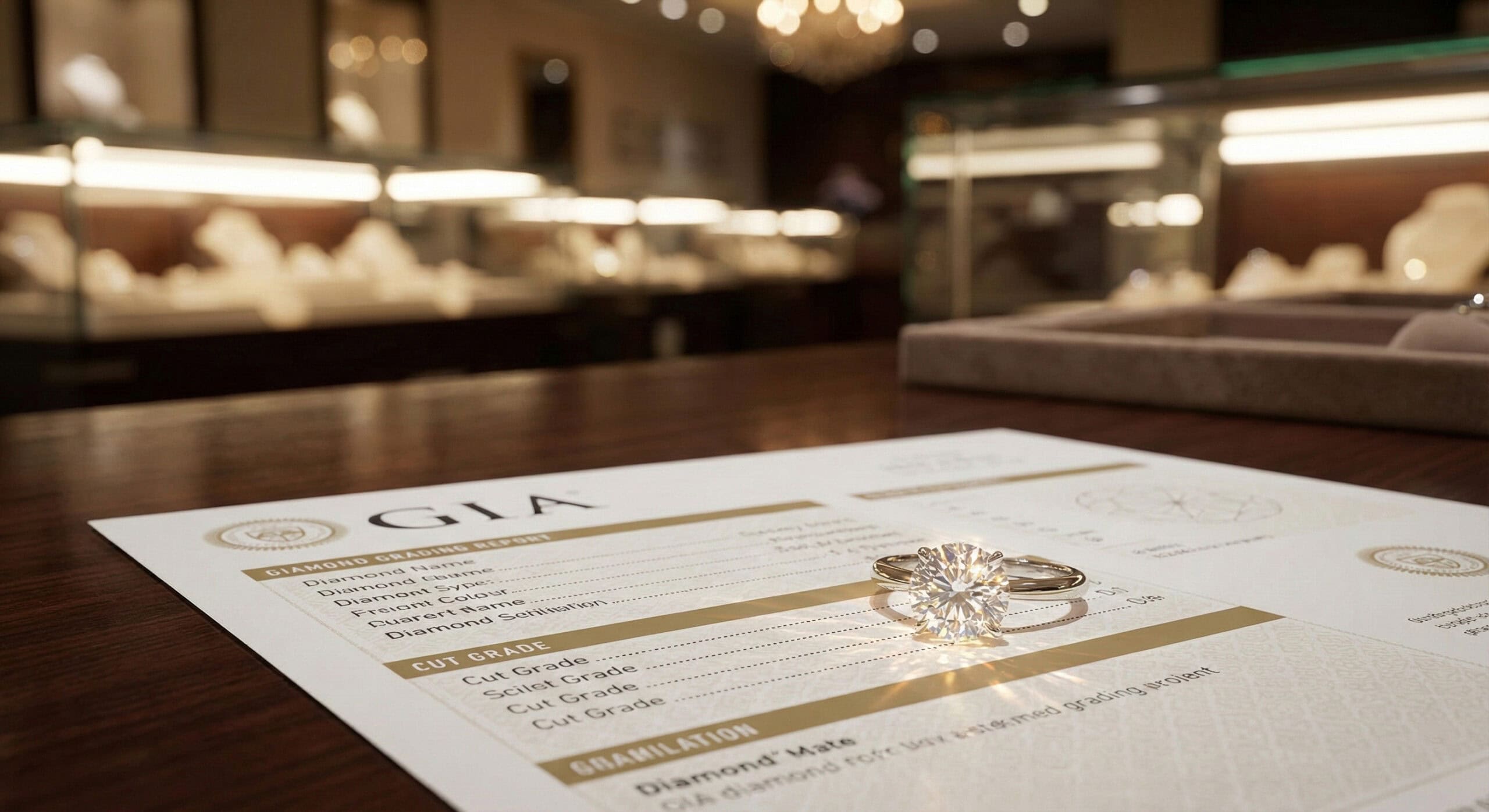
Shopping for a diamond engagement ring is one of the most exciting times in a couple's life, but let’s be honest—it can also be a little overwhelming. You are suddenly thrust into a world of acronyms, scales, and terminology that sounds more like a chemistry exam than a romantic gesture.
We see this confusion often. Many couples visiting our Leawood showroom come in clutching a smartphone filled with research, asking, "Is an SI1 clarity good?" or "Do I really need a D-color diamond?"
The key to answering these questions lies in understanding the industry standard: The GIA Diamond Grading Report. At Lilliane’s Jewelry, we believe an educated buyer is a happy buyer. In this guide, we will strip away the jargon and explain exactly how the Gemological Institute of America (GIA) grades diamonds, so you can prioritize what matters to you and maximize your budget.
What is the GIA and Why Does It Matter?
The Gemological Institute of America (GIA) is a non-profit institute widely considered the world's foremost authority on diamonds, colored stones, and pearls. Established in 1931, the GIA is actually the creator of the famous "4Cs" (Color, Cut, Clarity, and Carat Weight) and the International Diamond Grading System™.
Why is a GIA report important?
Think of a GIA report as a diamond's birth certificate and blueprint combined. Because the GIA is an independent third party with no financial stake in the sale of the diamond, their grading is unbiased and rigorous. When a diamond comes with GIA certification, you aren't just taking a salesperson's word for it; you have scientific verification of the stone's quality.
The 4Cs: The Pillars of Diamond Grading
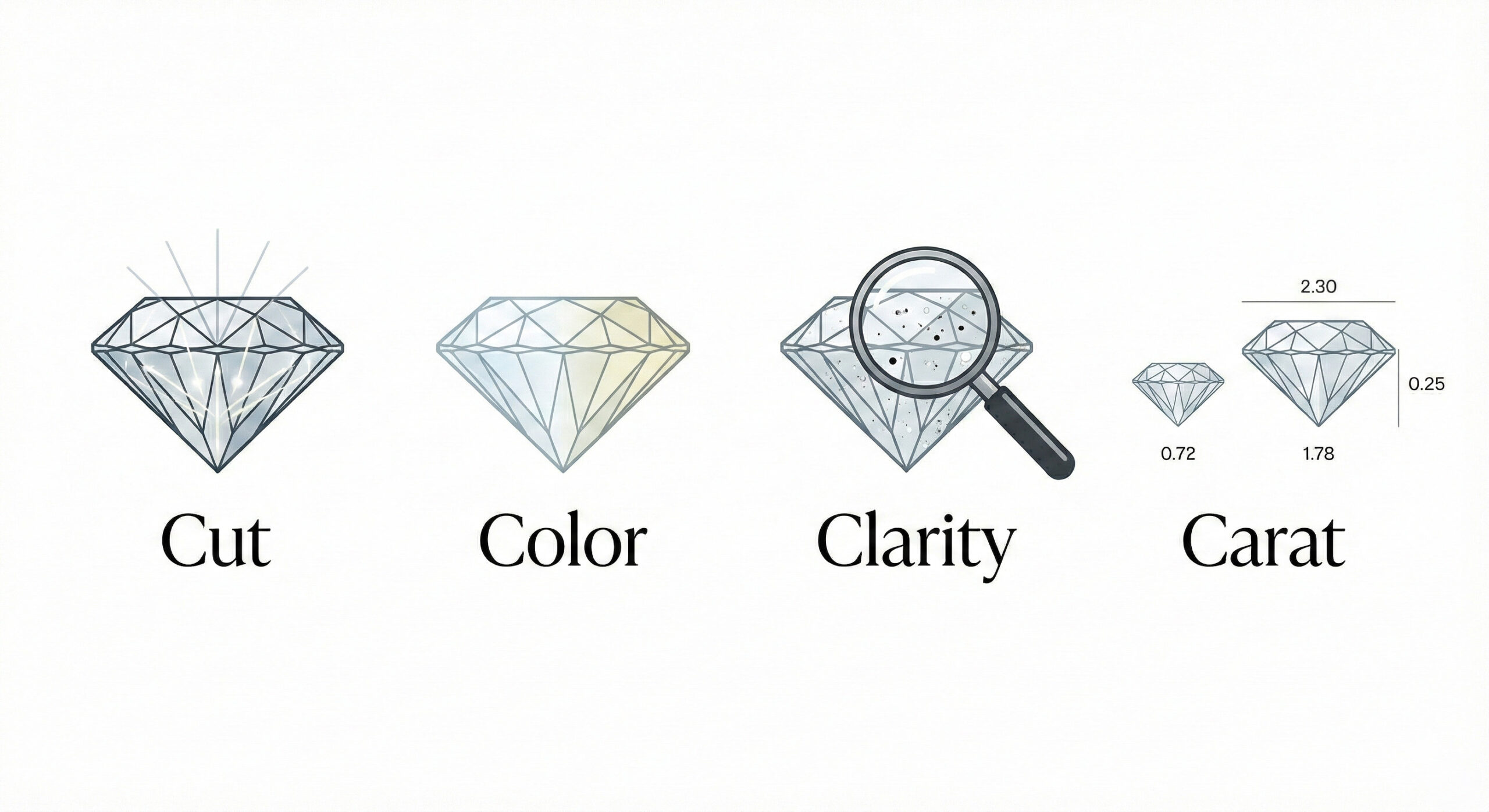
To read a report effectively, you need to understand the four specific metrics the GIA analyzes. Here is how they break down, ranked by how much they impact the diamond's beauty.
1. Cut (The Sparkle Factor)
Many people confuse "cut" with "shape" (like Round, Oval, or Princess), but in GIA terms, Cut refers to how well the diamond’s facets interact with light. This is arguably the most critical "C." If a diamond is cut poorly, it will look dull, even if it has perfect color and clarity.
- The Scale: Excellent, Very Good, Good, Fair, Poor.
- What GIA Measures: They analyze brightness (internal and external white light reflected), fire (the scattering of white light into all the colors of the rainbow), and scintillation (the sparkle produced, and the pattern of light and dark areas).
2. Color (The Absence of Color)
For standard diamonds, the "best" color is actually no color at all. The GIA color scale measures the degree of colorlessness.
- D-F (Colorless): The rarest and most expensive. To the naked eye, these look icy white.
- G-J (Near Colorless): These offer excellent value. When mounted in a ring setting, it is very difficult to distinguish a G or H diamond from a D or E.
- K-Z (Faint to Light Yellow): These stones have a noticeable warm or yellow tint.
Note: This scale does not apply to "Fancy Color" diamonds (like pinks or blues), which have their own grading system.
3. Clarity (The Purity)
Clarity assesses the presence of internal characteristics (inclusions) and surface irregularities (blemishes). Almost all diamonds have "birthmarks" because they were formed deep within the earth under extreme heat and pressure.
- FL (Flawless): No inclusions or blemishes visible under 10x magnification. Extremely rare.
- VVS1 - VVS2 (Very, Very Slightly Included): Inclusions are so slight they are difficult for a skilled grader to see under 10x magnification.
- VS1 - VS2 (Very Slightly Included): Inclusions are minor and range from difficult to somewhat easy for a skilled grader to see under 10x magnification.
- SI1 - SI2 (Slightly Included): Inclusions are noticeable to a skilled grader under 10x magnification.
- I1 - I3 (Included): Inclusions are obvious under 10x magnification and may affect transparency and brilliance.
4. Carat (The Weight)
Carat weight measures how much a diamond weighs, not necessarily how big it looks (which is influenced by the cut). One metric carat is defined as 200 milligrams.
The "Magic Numbers": Diamond prices jump significantly at "magic" weights like 0.50, 1.00, and 2.00 carats. A 0.96-carat diamond looks almost identical to a 1.00-carat diamond but can be significantly more affordable because it falls just under that benchmark.
💡 Lilliane's Expert Tip: "Eye-Clean" is Key
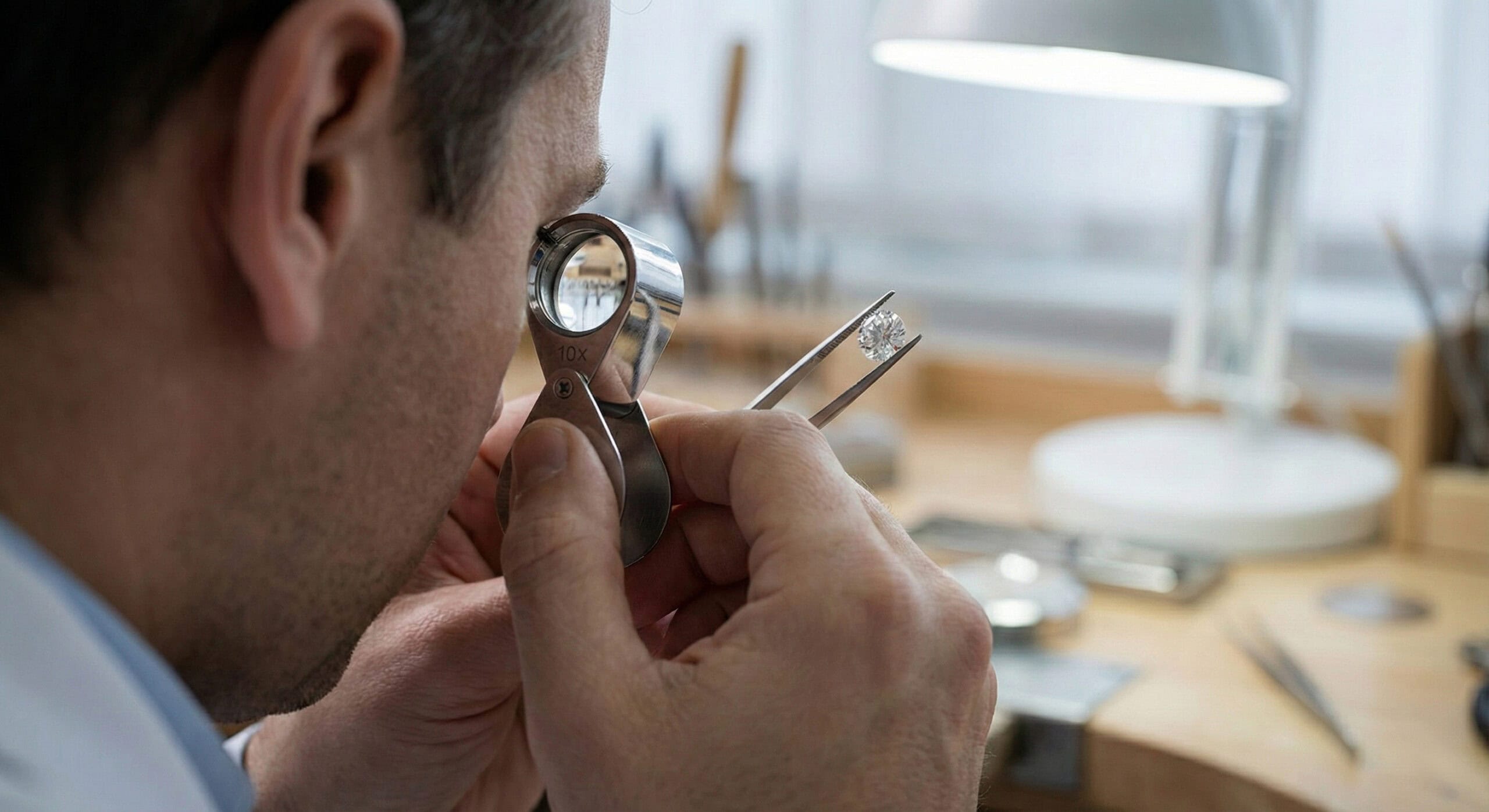
Don't get too hung up on achieving a "Flawless" clarity grade. At Lilliane’s Jewelry, we advise clients to look for "Eye-Clean" diamonds. An SI1 or VS2 diamond often looks identical to a Flawless diamond to the naked eye, but it costs a fraction of the price. We can show you how to use a jeweler's loupe to see the inclusions yourself, so you can decide if they bother you or not.
Fluorescence: The Forgotten Factor
At the bottom of many GIA reports, you will see a section for "Fluorescence." This refers to the diamond's reaction to UV light (like blacklight). Some diamonds emit a soft blue glow.
Is this bad? Not necessarily. In lower color grades (I-M), medium blue fluorescence can actually make the diamond appear whiter by canceling out some yellow tones. However, in very high color grades (D-F), strong fluorescence can sometimes cause the stone to look oily or hazy. This is why viewing the stone in person is vital.
Why Certification Protects You
A diamond without a grading report is just a shiny rock with an opinion attached to it. When you buy a GIA-certified diamond, you know exactly what you are paying for.
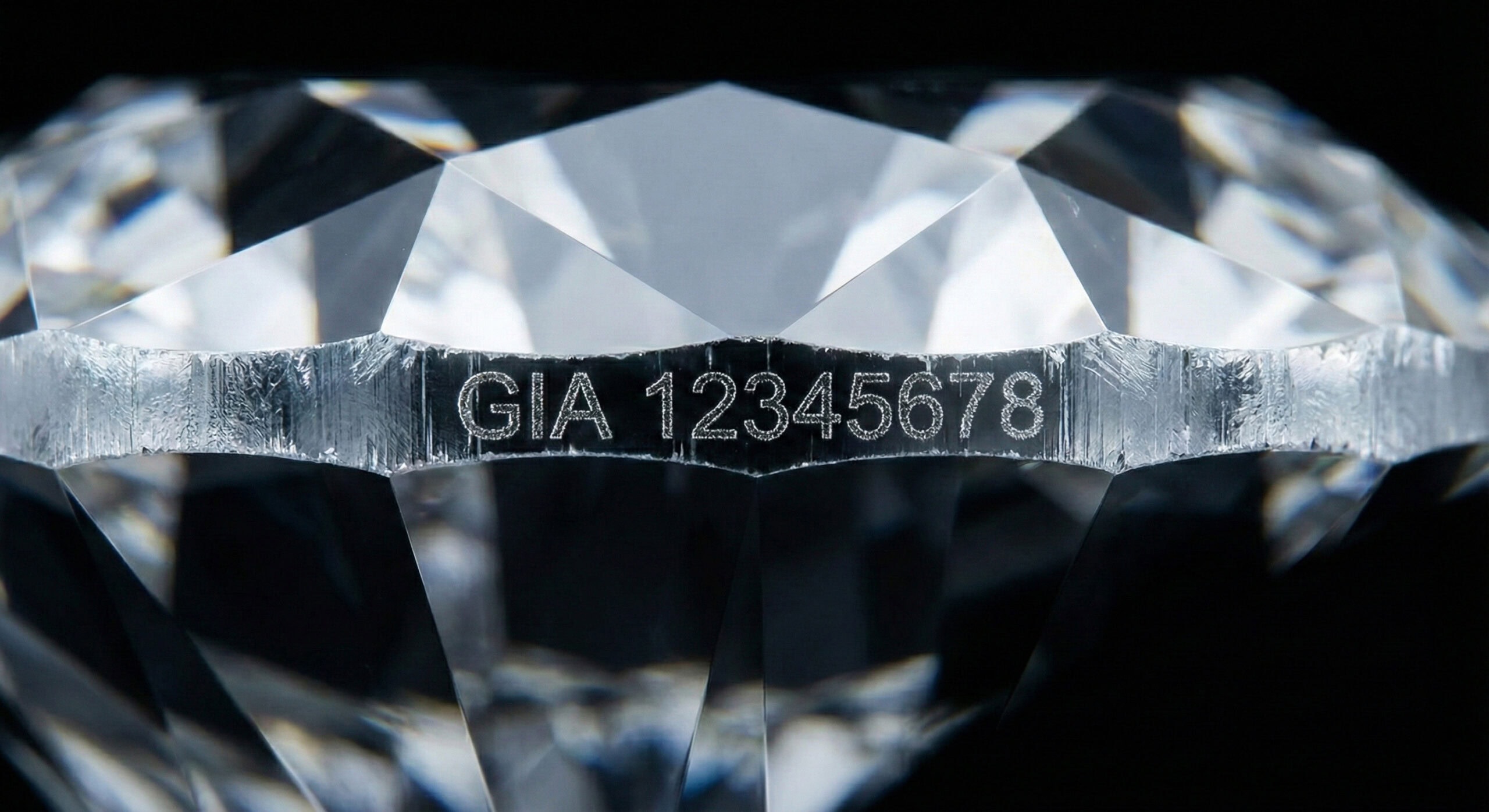
The report also includes a plotting diagram—a "map" of your diamond's specific inclusions. Since no two diamonds have the exact same inclusion pattern, this map acts as a fingerprint, proving the diamond in your ring is the same one described in the report. Most modern GIA diamonds also include a laser inscription (as seen above) for easy verification.
Ready to See the Difference in Person?
Reading about the 4Cs is a great start, but nothing compares to seeing the difference between a "Very Good" and "Excellent" cut with your own eyes. A GIA report gives you the data, but your eyes will tell you which diamond you truly love.
At Lilliane's Jewelry, we believe in a hands-on experience. We invite you to visit our Leawood showroom, where we can sit down with you, pull out the jeweler's loupe, and walk you through the grading report line-by-line.
Don't rely on photos alone—come let us show you exactly how to maximize your budget to get the most beautiful stone possible.
Have questions or want to set up a private viewing?
We are here to help you navigate the details.
Click Here to Contact Us or simply stop by the store.
